

Myopia Management
Myopia, also known as nearsightedness, is a common long-distance vision problem that affects millions of children and adults worldwide. While myopia is not a dangerous condition in the short term, it can be costly to manage and increase the risk of developing eye diseases later in life. Our practice offers MiSight, a myopia control program designed to slow down the progression of myopia in children. Call our office today for a myopia control consultation!
What Is Myopia?
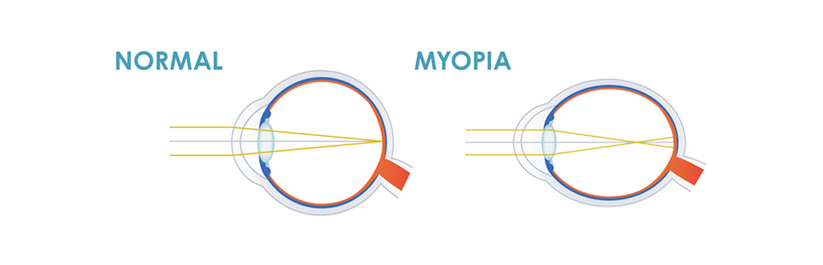
Myopia is a refractive condition that causes poor long-distance vision. The eyeballs of myopic children are too long, causing distant objects to appear blurry. Myopia tends to get worse as your child gets older.
Myopia affects daily activities and school performance. You may notice new behavior patterns in your child if they are myopic. Myopic children may begin to struggle in school, squint or tilt their heads often, move close to the TV, sit in front of the classroom, or read a book close to their faces. Myopia can also cause painful symptoms, such as frequent headaches, eye strain, and fatigue.
Myopia, also known as nearsightedness, causes poor long-distance vision. In myopic eyes, the eyeball is either longer than normal, or the cornea is too curved, causing objects far away to appear blurry
The Progression of Myopia over Time
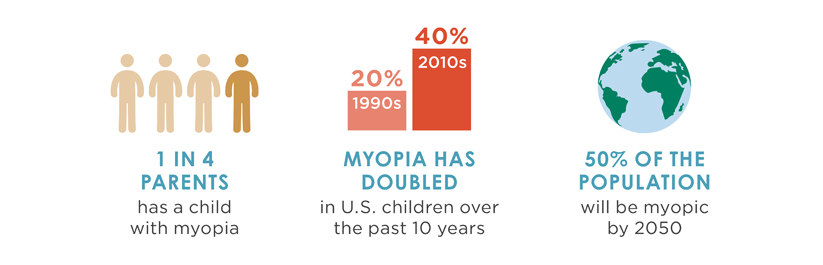
The number of children with myopia has been increasing over the last few decades.
What are the Main Myopia Risk Factors?
There are several possible reasons for the increase in myopia:
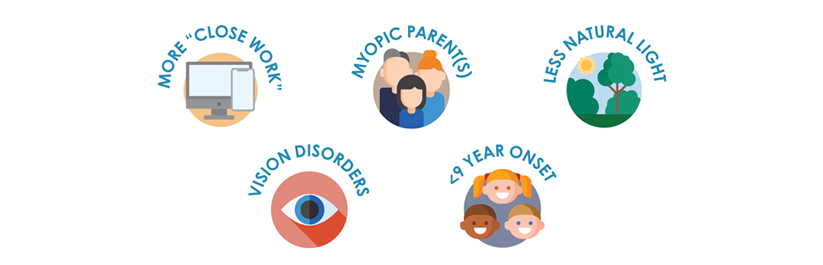
- More "Close Work"
2+ hours per day spent on "close work" (not including school work) can increase the risk myopia.
- Myopic Parent(s)
There is a 25% chance a child will develop myopia if one parent is myopic and a 50% cha if both are myopic.
- Less Natural Light
Less than 60-90 minutes per day spent outdoors in natural sunlight could contribute to myopia.
- Vision Disorders
Specific binocular vision and focusing disorders increase the risk of myopia.
- <9 Year Onset
Myopia progresses faster at an early age, especially if a child is less than 9 years old.
Myopia Risk Factors
Myopia typically develops in childhood and worsens over time. As the condition progresses, your child may complain of headaches or eyestrain. Myopia can also cause difficulties with schoolwork or other activities that require distance vision.
In severe cases, myopia can lead to eye health problems, such as cataracts, maculopathy, glaucoma, or retinal detachment, all of which can lead to vision loss. Vision loss secondary to cataracts and retinal detachment may be reversible. Vision loss due to maculopathy and glaucoma is unrecoverable.
Why is Myopia Control Important?
Controlling myopia reduces the risk of serious eye conditions.
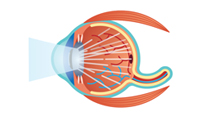
Cataracts
Cataracts tend to develop sooner in nearsighted eyes.
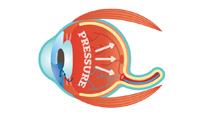
Glaucoma
Nearsighted people have a 2-3x greater risk of glaucoma.
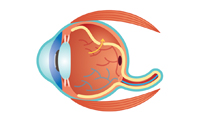
Retinal Detachment
Nearsightedness increases the risk of retinal detachment.
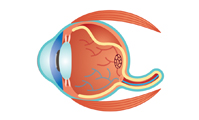
Myopic Maculopathy
A prescription over -6.00D poses a 40x increased risk for degeneration of the central retina.
What are the Treatment Options?
Glasses are not enough. Treatments include:
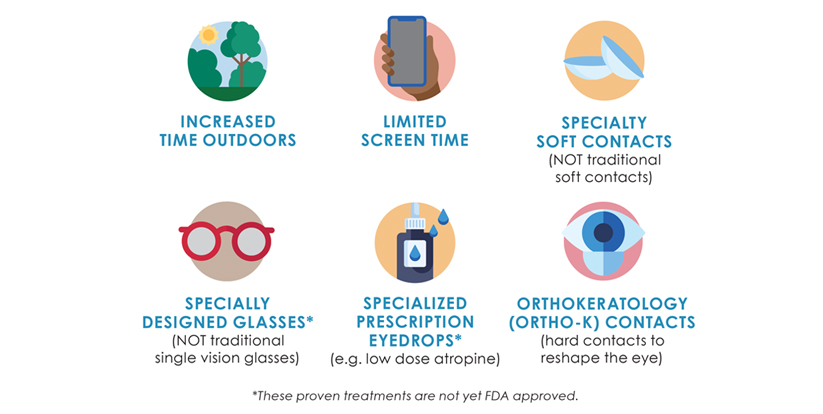
- Increased Time Outdoors
- Limited Screen Time
- Specialty Soft Contacts (NOT traditional soft contacts)
- Specially Designed Glasses * (NOT traditional single vision glasses)
- Specialized Prescription Eyedrops* (e.g. low dose atropine)
- Orthokeratology (Ortho-L) Contacts (hard contacts to reshape the eye)
*These proven treatments are not yet FDA approved.
MiSight Myopia Control Program
Traditional eyeglasses and contact lenses help provide clear vision to those who are myopic but have no effect on myopia's rate of progression. Siowing the progression of myopia requires specialized intervention.
Our practice employs the MiSight myopia control program. MiSight is a specialized soft contact lens worn during the day, then disposed of at night. MiSight corrects myopia and reduces its progression in children between 8-12 years old (at the initiation of treatment). MiSight is FDA-approved, clinically proven to be effective, and safe for children.
The MiSight myopia control program is in addition to a regularly scheduled eye exam you will meet with our optometrist to learn about MiSight and track its progress, Call our practice today for more information and to see if your child is a good candidate for MiSight.
Stellest Myopia Control Lenses
Traditional eyeglasses correct nearsightedness but do not slow its progression. Managing myopia requires a specialized approach that helps control how the eye grows over time.
Our practice offers Stellest lenses, advanced spectacle lenses designed to slow the progression of myopia in children. Stellest uses specialized lens technology that manages how light focuses on the retina, providing clear vision while helping to guide healthy eye development.
Our practice offers Stellest lenses, advanced spectacle lenses designed to slow the progression of myopia in children. Stellest uses specialized lens technology that manages how light focuses on the retina, providing clear vision while helping to guide healthy eye development.
This comfortable, noninvasive option fits seamlessly into your child's daily routine and supports long-term eye health. The Stellest myopia control program is offered in addition to your child's regular eye exams, allowing our optometrist to monitor changes and track progress.
Call our office today to learn more and see if Stellest lenses are a good fit for your child.
Contact Us Today For a Myopia Control Consultation
If your child is having trouble seeing the whiteboard at school or objects in the distance, contact us today to schedule an appointment. Treating myopia as quickly as possible can help you save on prescription eyewear costs and reduce your child's chances of developing an eye condition. We will work with you and your child to create a treatment plan to address their myopia. Contact us today to learn more about our myopia management program!
Quick Links
Helpful Articles
article_category: products
article_category: psychiatry
article_category: faqs
article_category: cats
article_category: general
article_category: services
article_category: technology
article_category: dogs
article_category: restorative
article_category: vision therapy
article_category: contact lenses
article_category: health
article_category: conditions
article_category: eye surgery co-management
article_category: exotic
article_category: cosmetic
article_category: surgical procedures
article_category: aesthetics
article_category: preventative
article_category: ocular disease management
article_category: eyeglasses
article_category: eye health
article_category: large animal
[]
article_category: psychiatry
article_category: faqs
article_category: cats
article_category: general
article_category: services
article_category: technology
article_category: dogs
article_category: restorative
article_category: vision therapy
article_category: contact lenses
article_category: health
article_category: conditions
article_category: eye surgery co-management
article_category: exotic
article_category: cosmetic
article_category: surgical procedures
article_category: aesthetics
article_category: preventative
article_category: ocular disease management
article_category: eyeglasses
article_category: eye health
article_category: large animal
[]
Flowbite is an open-source library of interactive components built on top of Tailwind CSS including buttons, dropdowns, modals, navbars, and more.
Check out this guide to learn how to get started and start developing websites even faster with components on top of Tailwind CSS.
All Eye Care Services
Find personalized eye care excellence with our comprehensive services. From eye exams to advanced diagnostics, trust us for all your vision needs.

Keep In Touch
For non-urgent questions or to learn more about our services, contact us today!
© 2026 Moorhead Vision. All rights Reserved - Accessibility Statement - Privacy Policy - Sitemap
Managed and Designed by 